

The monkey’s paw has curled for Danielle Smith: there’s finally a genuine conflict of interest between Canada’s west and east, and all she has to do to be on Team Alberta is argue that you deserve a cheaper electric car.
That’s because on Thursday, Canada’s canola exports were hit with a punishing 75.8% tariff—not by Donald Trump, but by China.
It’s tit for tat for Canada’s tariffs on Chinese electric vehicles (EVs), steel and aluminum, which the feds imposed last October, following the lead of the United States and the European Union. They and the feds accuse China of trying to corner the world EV market by unfairly subsidizing the cars and making them too cheap.
In China, you can get one of the BYD company’s EVs for less than $15,000. A North American-made EV in Canada, by contrast, will cost you at least $38,000. So they are, indeed, much cheaper.
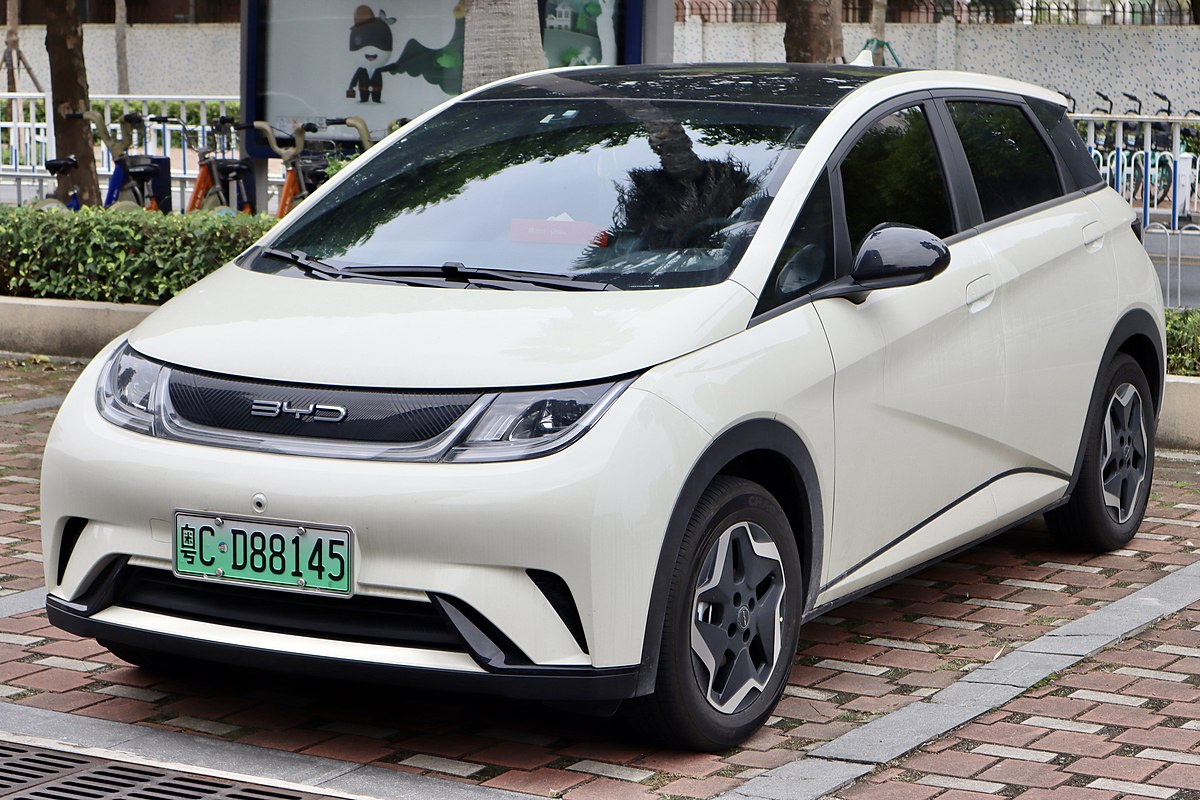
The BYD Dolphin, which retails for a remarkable $14,000. Creative Commons / Wikimedia

Whether or not that’s fair is a point of contention. Some of China’s cost savings on EVs come from having the whole supply chain vertically integrated, especially the batteries, which are made using rare earth metals that China has developed a huge capacity to produce. Some of it comes from wages in China being lower. Some of it may come from government subsidies. The firmest accusations of unfair subsidies come from auto industry lobby groups like the Alliance for American Manufacturing.
Prime Minister Mark Carney had a chance to pull back after China fired ‘warning shots’ earlier this year but elected to fight it out. Now canola farmers are in the line of fire.
Canada produces about 30 per cent of the world’s canola and sends much of it to China. About 14,000 workers in Alberta are employed in canola production, says industry group the Alberta Canola Producers Commission, which in turn is about a third of Canada’s total.
Estimates put the entire country’s ranks of workers in EV manufacturing at less than 10,000, and despite receiving billions in subsidies, the industry is struggling to stand on its own legs. Canada only built around 25,000 EVs last year. By contrast, Mexico built 220,000.
Crucially, there aren’t many canola farmers in Ontario and Quebec—and there aren’t any EV factories out here. Which means for once, the interests of easterners and Albertans really are in conflict, and the feds really are selling westerners out.
Smith denounced the tariffs on Twitter and is calling for the feds to take immediate action.
But you’ve got to imagine the call sticking in her throat a bit. Electric vehicles have been a frequent punching bag for the right, both rhetorically and legally. Just a few months ago, the UCP slapped an extra fee on EVs that the Electric Vehicle Association of Alberta called a “political stunt.”
Indeed, Alberta’s environment minister Rebecca Schulz kept on that track Thursday with her announcement that Alberta rejects the feds’ mandate that twenty per cent of cars made in Canada next year be zero-emission. And if the cost for getting that EV manufacturing industry off the ground is putting canola farmers across the prairie out of business, this time the public might agree with the UCP.
From the Report:
-
Writing for the Report, freelance journalist David Slater examines MacEwan University’s crackdown on student advocacy for Palestine. The surveillance has been stick-handled directly by the school’s executives after they dismissed MacEwan’s security director.
-
Euan Thomson from drugdatadecoded.ca returns on the podcast to tell us about Calgary police dabbling in “dragnet” facial surveillance technology.
- Jeremy spoke with Public Interest Alberta director Bradley Lafortune about PIA’s latest report on child poverty in Alberta, which finds nearly one in five children in the province living below the poverty line.
Sundries
-
The Electoral Boundaries Commission, an independent body formed from government appointees that draws Alberta’s electoral map, is reviewing submissions for potential updates this year. As usual, some rural conservatives are calling to tilt representation even further towards rural Albertans with the well-worn excuse that representing very geographically large ridings are difficult. But the most egregious submission was from UCP minister Nathan Neudorf. Neudorf wants Lethbridge cracked into three or four new ridings that would guarantee a UCP sweep of Lethbridge in the next election.
-
A new report from the Pembina Institute argues that Alberta’s oil industry simply never recovered from the 2014 global price crash and is now an industry in decline that is employing fewer and fewer people.
-
Mike Terrigno, a real estate developer in Calgary who has launched legal actions against Calgary’s council and individual councillors for allegedly defaming him and obstructing his business, lost in court against Druh Farrell on Thursday.
-
Thanks to drastic funding cuts by the UCP, Red Deer’s Turning Point Society will be ceasing to provide many of its community services, which included women’s services, blood-borne and sexually-transmitted disease testing, and its downtown drop-in centre.
-
Former Edmonton police commissioner John McDougall—a character that readers who follow our work on police accountability will be familiar with—appears to be losing his mind.
-
The separation referendum campaign has hit an obstacle, as the Court of King’s Bench will be conducting a review of its constitutionality, having quashed an appeal this week.
- You can’t get a free COVID-19 vaccine in Alberta anymore, as our anti-vaxxer-led government has elected to gate them behind a fee and an application process. People with the intelligence to not want to get the flu that gives you brain damage and maybe kills you will now have to apply for a vaccine through a government portal—and pay for it out of pocket.
This is the online version of the Progress Report email newsletter. Don't depend on some social media or search engine algorithm to find this content in the future. Sign up to get updates on the most important local political issues in your inbox every week. The Progress Report is funded by readers like you: if you'd like to see more, please consider becoming a monthly patron.